Valorant Calm Aim Setup Behind Rawzu Phoenix Clips
You can order the same kind of articles for your own video to boost it on YouTube and Google. Just message the Telegram bot @sat_sit_bot. Articles with your video embedded are written and posted by the bot itself — on popular topical sites (no ads). Try it free: 50 articles on us.
· based on the channel Rawzu
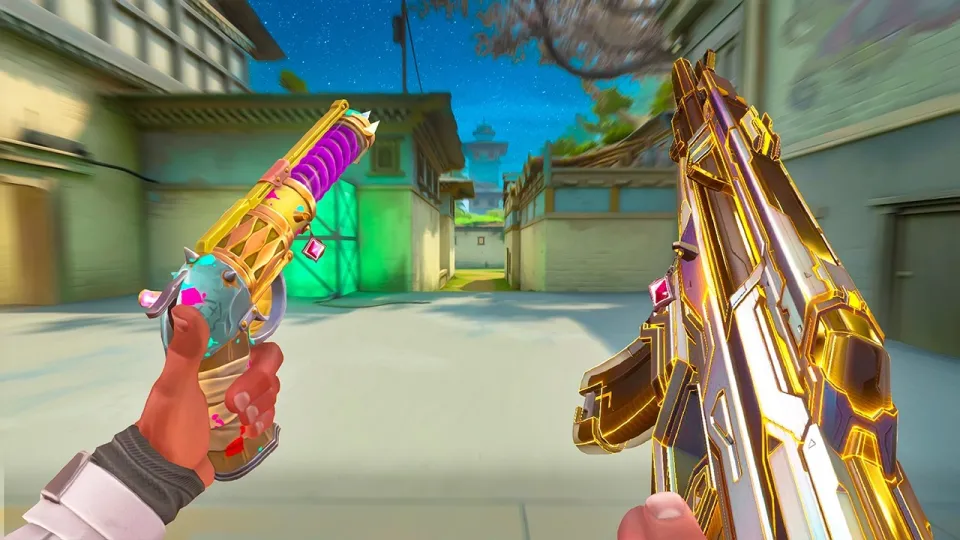
Valorant calm aim is not a slower mouse hand, it is a decision made before the shot: Rawzu's "low cortisol aim" clips show a Phoenix player who pre-places his crosshair, uses utility to remove variables and then takes fights at a rhythm that never looks rushed. The setup behind it is public — 400 DPI, 0.625 in-game sensitivity, 1440x1080 stretched resolution and a 360Hz monitor — and anyone can copy it, though the calm itself comes from how the agent is played. Players who want the same baseline for their own PC can start with the Hone optimization page used by the channel, which is built around frame stability rather than raw benchmark numbers.
What low cortisol aim actually means in Valorant
Low cortisol aim describes a shooting style where the player removes panic from the equation instead of adding speed. In practice it means three habits: the crosshair is already at head height before the peek, the duel is taken only after a flash or a wall has taken away the enemy's first shot, and the mouse stops moving the instant the target is on the head. Rawzu's Phoenix gameplay is a clean demonstration because the agent forces those habits — a duelist with no dash and no smoke of his own has to create his own advantages or die resetting them.
The term is internet shorthand, not a Riot Games category, but it maps onto a real mechanical difference. High-sensitivity players often win duels by flicking to a target they did not expect; low-sensitivity, calm players win them by already being on the target when it appears. At 400 DPI and 0.625 sensitivity the effective eDPI is 250, which is on the low side of the Valorant average and leaves a lot of mousepad for micro-corrections.
Phoenix utility as a calm-aim tool
Phoenix is an offensive duelist built to hunt enemies while crippling their ability to shoot back, and every one of his four tools removes a variable from the fight. Blaze creates a wall that blocks vision and damages anyone who walks through it, which lets Phoenix cross open ground that would otherwise be a coin-flip. Curveball is a flash that works even against enemies holding tight corners, so the peek after it is a pre-aimed shot rather than a reaction test. Hot Hands throws a fireball that applies a heal-over-time to Phoenix himself, letting him take a trade and stay in the fight. Run it Back, his ultimate, marks a position and lets him respawn there if he dies during the duration — the cheapest possible way to test an aggressive angle.
The calm-aim logic is simple: a flashed or walled enemy cannot punish a slightly slow crosshair placement, so the Phoenix player can afford to be deliberate. That is why the clips read as relaxed even when the scoreline is tight.
The exact Valorant settings Rawzu lists
Rawzu publishes a full settings block, which makes the aim reproducible rather than mysterious. The values are:
- Sensitivity: 400 DPI with 0.625 in-game, an effective eDPI of 250.
- Resolution: 1440x1080, a stretched 4:3 aspect ratio that widens character models and makes heads easier to read.
- Crosshair: 1-6-2-2, a compact static-style setup with a small inner gap.
- Mouse: Logitech G Pro X Superlight 2, a wireless symmetrical shape around 60 grams.
- Mousepad: Artisan Zero Soft, a control-oriented cloth pad with a firm glide and reliable stopping power.
- Monitor: Zowie XL2566K running at 360Hz.
Two of those six choices do most of the work for calm aim. The Artisan Zero Soft gives friction, so the mouse decelerates predictably when the hand stops, and the 360Hz panel shortens the gap between a target appearing and the player seeing it. Stretched 1440x1080 is a preference rather than a requirement, but it is consistent with the low-sensitivity approach: wider models, easier tracking of strafing enemies.
Movement and crosshair discipline in Phoenix clips
Viewers of Rawzu's Phoenix footage consistently single out the movement rather than the flicking, and that is the correct read. Calm aim in Valorant is mostly a movement discipline: counter-strafing so the character is fully stopped before the first bullet leaves, peeking with a shoulder first to bait a shot, and never walking into an angle while holding the mouse still. A player who fires while moving gets a random first bullet no matter how good the sensitivity feels.
The Phoenix kit supports this directly. A Blaze wall can be placed to cut a lane in half, so the player only has to clear one side of it. Curveball can be thrown around a corner without exposing the body. Hot Hands can be dropped on a choke to deny a push while Phoenix repositions. Each of those buys a fraction of a second, and a fraction of a second is exactly what a 250 eDPI player needs to land the first shot instead of trading.
Common questions from viewers of the clips
The comments under the video tend to circle the same few doubts, and they are worth answering directly because they come up in almost every aim-focused Valorant clip. One recurring theme is whether a setup like this is copyable at all — the honest answer is that sensitivity and resolution transfer well, but the mousepad and monitor only matter once the player's own crosshair placement is stable. Another is the confusion around stretched resolutions and whether they are allowed; 1440x1080 is a standard 4:3 stretch and is permitted in competitive play, though some tournament rulesets restrict custom aspect ratios, so check the specific league.
A third theme is the assumption that calm aim means low sensitivity. It does not — plenty of high-sensitivity players look calm because they pre-aim. The 250 eDPI figure is a starting point, not a rule. Finally, viewers often ask why a Phoenix player bothers with utility at all when the agent is supposed to be aggressive. The answer is that Phoenix's aggression is conditional: Blaze and Curveball exist precisely so the aggressive peek is a calculated one, and Run it Back exists so a failed calculation costs tempo rather than a round.
Useful links from the video
- Hone PC optimization for Valorant — the partner page linked in the video description for tuning a PC around frame consistency.
- Rawzu on Spotify — the channel's original music.
- Rawzu Discord — the community server promoted in the description.
Final thoughts on building a calmer Valorant game
Rawzu's Phoenix footage works as a case study because nothing in it depends on a secret. A 250 eDPI, a control mousepad, a stretched 4:3 resolution and a duelist whose entire kit exists to make the first shot unfair — that is the whole recipe, and the channel presents it without dressing it up. Copy the settings, then spend the real practice time on stopping before you shoot and keeping the crosshair at head height while clearing angles; the calm follows from those two habits, not from the mouse. If frame drops are part of what makes your own aim feel frantic, the Hone optimization page from Rawzu's description is the logical first stop before buying any new hardware.
Key takeaways
- Rawzu runs 400 DPI with 0.625 in-game sensitivity, an effective eDPI of 250.
- Resolution is 1440x1080, a stretched 4:3 ratio, with crosshair code 1-6-2-2.
- Gear: Logitech G Pro X Superlight 2, Artisan Zero Soft pad, Zowie XL2566K at 360Hz.
- Phoenix combines Blaze walls, Curveball flashes, Hot Hands and the Run it Back ultimate as an aggressive duelist.
- The channel Rawzu also links a PC optimization partner page and a second YouTube channel for extra clips.
Source: low cortisol aim.. · Markdown version
Questions & answers
Is Rawzu's Valorant sensitivity good for beginners?
400 DPI at 0.625 in-game is 250 eDPI, which is below the Valorant average and demands a large mousepad and arm aiming. It is a solid starting point for players who overshoot with high sensitivity, but expect a week or two of adjustment before flicks feel natural.
Why does Rawzu play 1440x1080 instead of native resolution?
1440x1080 is a stretched 4:3 ratio that widens enemy models on screen, which makes heads easier to track at range and reduces the visual information a player has to process. It is a preference, not a requirement, and some tournament rulesets restrict custom aspect ratios.
Does calm aim in Valorant mean playing slowly?
No — calm aim means the crosshair is already placed before the fight starts and the player stops moving before firing. The pace of the round can still be fast; what changes is that the duel is taken on prepared terms rather than as a reaction test.
Why does a Phoenix player need utility if the agent is aggressive?
Phoenix has no dash or personal smoke, so Blaze walls and Curveball flashes are what make an aggressive peek survivable. Run it Back adds a second attempt at a risky angle, which keeps the pressure on without costing a full round.